Engagement Season Wedding Checklist Template (Printable 2026–2027)
Updated 2026-11-27 · Published by Perfect Wedding Tips Editorial
Printable engagement season checklist template with spreadsheet columns, 2026 US budget anchors, deposit waves, and peak booking priority tiers.
Quick answer
An effective engagement season checklist template sequences tasks by vendor scarcity and deposit timing rather than aesthetic fun. Lock ring insurance, your true all-in budget after 25%–35% plus-plus venue fees, a Tier A guest count, and 3–5 venue tours first, then book single-date creative vendors inside days 46–120.
Forecast your first 30–90 day vendor retainers and monthly savings with the Engagement Deposit Calculator: Open the calculator.
At a glance
| Template Phase | Window After Proposal | Booking Priority Tier | Illustrative Cash Outflow Share |
|---|---|---|---|
| Phase 1: Foundation & Ring | Days 1–14 | Protection, budget ceiling & Tier A headcount | 0%–2% (insurance rider, appraisal) |
| Phase 2: Anchor Venue Lock | Days 15–45 | Tier 1: Venue, ceremony site & full/partial planner | 12%–18% of total budget (35%–50% venue retainer) |
| Phase 3: Creative Core Wave | Days 46–120 | Tier 1: Photo, video, caterer, music, beauty, gown | 15%–20% of total budget (25%–40% retainers) |
| Phase 4: Logistics & Trials | Months 5–9 | Tier 2: Florals, room blocks, invites, dress fittings, trials | 10%–15% (mid-point installments) |
| Phase 5: Freeze & Final Balances | Final 60–90 Days | Final counts, liability COI, run-of-show, tips | 50%–60% (final invoices + 10% contingency check) |
Why Engagement Season Needs a Priority-Ranked Template (Spreadsheet Setup)
Couples engaged between Thanksgiving and Valentine’s Day enter the busiest booking window on the US wedding calendar. Generic checklists scatter decor moodboards alongside venue contracts, causing newly engaged couples to lose prime 2027 Saturdays while debating centerpiece colors. Copy this template into Google Sheets, Notion, or a tabbed binder using six columns: Phase, Action Item, Assigned Owner, Target Window, Retainer % / Budget Cap, and Written Contract Verified. Before entering dollar caps, anchor expectations to verified 2026 US averages: The Knot 2026 Real Weddings Study (10,474 couples married in 2025) reported $34,200 nationally ($292 per guest across 117 average guests), and Zola’s First Look Report 2026 reported $36,000. Use the phase map below to pace both tasks and liquid cash across your engagement.
- Spreadsheet columns to create on Day 1: Phase | Task | Partner Owner | Due Window | Est. Retainer $ | Contract & ++ Tax Checked.
- Create one shared wedding email inbox (e.g., partner1andpartner2wedding@gmail.com) so proposals, holds, and payment schedules stay centralized.
- Separate Tier 1 single-date vendors (venue, planner, lead photographer, band/DJ, bridal hair & makeup) from Tier 2 scalable vendors (stationery, rentals, bakery, favors).
Printable Phase 1 & Phase 2 Checklist: Ring, All-In Math & Venue Lock (Days 1–45)
Print or check off these first two blocks before booking any creative vendor. No photographer, caterer, or hairstylist can confirm availability until your date and property are under contract. Crucially, evaluate every venue brochure on all-in hospitality math rather than base sticker price: across US venues, mandatory service charges (commonly 18%–25% as a planning estimate) plus state sales tax stacked onto that service fee routinely raise invoices by 25%–35% before voluntary tips. As verifiable arithmetic, a 20% service charge stacked with 8% sales tax equals +29.6% (1.20 × 1.08 − 1), turning a $130 per-plate quote into $168.48 before gratuities. Pair this phase with our First 30 Days Engaged Wedding Planning Checklist and 2027 Venue Contract Hidden Fees Checklist before wiring any non-refundable deposit.
- [ ] Days 1–3: Call parents, grandparents, and close friends before posting online; photograph the jeweler receipt and GIA/IGI grading report into cloud storage.
- [ ] Days 3–7: Bind a scheduled valuable personal property rider or standalone jewelry policy (standard homeowners policies commonly cap unscheduled jewelry theft near $1,500 and exclude accidental loss).
- [ ] Days 7–10: Wear the ring indoors at normal 68°F–72°F room temperature across several days before resizing, since cold winter air temporarily shrinks finger size.
- [ ] Days 10–14: Rank your top three wedding non-negotiables privately (for example: food/bar, photography, live music) and select 2–3 flexible season or Friday/Sunday windows.
- [ ] Days 14–21: Confirm written family contributions and divide your hospitality budget ceiling by roughly 1.30 (planning rule of thumb) to absorb ++ service fees, stacked taxes, and gratuities.
- [ ] Days 21–28: Build an A/B/C guest spreadsheet (Tier A must-invites, Tier B extended circle, Tier C space-permitting) so you only tour venues whose minimum headcount stays at or below Tier A.
- [ ] Days 28–45: Request itemized pro-forma invoices from 3–5 shortlisted venues, verify $1M event liability rules, overtime rates, corkage, and price-escalation caps, then place a 7–14 day courtesy hold before signing.
Printable Phase 3 Checklist: Single-Date Vendors, Attire & Beauty Wave (Days 46–120)
Once your venue contract locks your date and ceremony hour, pivot immediately into the Days 46–120 creative wave. Peak-season single-date pros—especially lead photographers, live bands, and top bridal hair-and-makeup teams—book 10 to 16 months ahead for prime spring and fall Saturdays. Track each vendor quote on a uniform line in your sheet and forecast combined upfront cashflow in our Engagement & First 90 Days Wedding Deposit Calculator so multiple 30%–40% retainers landing in the same billing cycle never strain your checking reserve. Made-to-order wedding gowns also enter the critical path here because typical designer production runs 6 to 9 months plus 8 to 12 weeks for fittings.
| Vendor Category | Peak Booking Window | Illustrative Retainer (Est.) | Key Checklist Audit Clause |
|---|---|---|---|
| Venue & Catering Anchor | Days 15–45 (12–18 mo out) | 35%–50% peak (25%–30% off-peak) | Dollar F&B minimum vs headcount floor; ++ tax math; 5% inflation cap |
| Photographer & Video | Days 46–60 (10–15 mo out) | 30%–50% upon signing | Delivery SLA, backup photographer clause, overtime hourly rate |
| Band or DJ | Days 60–80 (9–12 mo out) | 25%–50% upon signing | Venue decibel curfew, load-in window, meal requirement |
| Bridal Hair & Makeup | Days 60–90 (9–11 mo out) | 25%–50% + trial fee | Bridal party chair minimum, assistant ratio for 5+ services |
| Florist & Rentals | Days 75–120 (8–10 mo out) | 25%–35% upon signing | Midnight tear-down/pickup fee ($400–$1,200 est.), rain-plan swap |
| Bridal Gown & Alterations | Days 75–120 (8–10 mo out) | 50% order / 50% pickup | Expected ship date + 8–12 week alterations & bustle buffer |
- [ ] Days 46–60: Book your lead photographer and videographer; confirm raw-file policies, second-shooter coverage, and engagement-session turnaround.
- [ ] Days 46–75: Lock off-site catering (if dry-hire venue) and compare open-bar packages against Zola’s $20–$30 per-guest open-bar benchmark and The Knot 2026 $2,800 average alcohol spend.
- [ ] Days 60–80: Book band or DJ (verify sound-curfew compliance and power specs) plus floral designer with a seasonal flower-substitution flexibility clause.
- [ ] Days 60–90: Reserve your lead bridal hairstylist and makeup artist; confirm minimum chair count, travel fees, early-morning call-time charges, and trial scheduling.
- [ ] Days 75–120: Shop and order made-to-order bridal gown (6–9 month typical lead time) and begin suit/tuxedo palette coordination.
- [ ] Days 90–120: Secure courtesy hotel room blocks (confirm attrition-free clauses so you are not billed for unbooked rooms) and draft Save-the-Date mailing addresses.
Printable Phase 4 & Final 90-Day Checklist: Trials, Insurance & Run-of-Show
Months 5 through wedding week are where organized templates prevent expensive rush shipping and day-of friction. Keep every deadline tied to concrete handoffs—menu tastings before seating charts, actual veil and earrings purchased before the hair trial, and final guest counts locked 14 to 21 days before the ceremony so catering, rentals, and bar orders all reflect the exact same headcount. If you are supplying BYOB alcohol at a dry-hire property, plug final adult RSVPs into a standard catering formula before placing the order and confirm unopened-case return policies in writing.
- [ ] Months 5–7: Mail Save-the-Dates (8–10 months out for destination/holiday weekends; 6–8 months for local dates), finalize ceremony officiant, and book shuttle transportation.
- [ ] Months 4–6: Complete catering tasting, finalize bar tier or BYOB shopping counts, and buy actual wedding shoes, shapewear, veil, and hair accessories before first dress fitting.
- [ ] Months 3–4: Mail formal invitations (8–10 weeks out with RSVP deadline 4 weeks before wedding) and schedule timed bridal hair-and-makeup trial wearing your real neckline silhouette and veil.
- [ ] Days 45–60 Out: Purchase $1M general liability / $2M aggregate event insurance naming the venue as Additional Insured (typically $150–$250 planning estimate) and verify host liquor coverage.
- [ ] Days 21–30 Out: Lock final guest headcount, submit hot vendor meal counts (commonly 6–12 working pros at $35–$75 each, illustrative range), finalize seating chart, and verify dress pickup.
- [ ] Days 7–14 Out: Build the master wedding-morning schedule with 15–20 minute hair/makeup buffers, distribute one-page vendor call sheet with day-of contact numbers, and seal labeled tip envelopes.
Five Peak-Season Checklist Mistakes to Avoid (Plus the Weekly Review Rhythm)
Even a thorough template fails if couples treat it like a guilt list instead of a weekly operating system. Most Engagement Season budget overruns trace back to five predictable sequence breaks—each easy to prevent when you review your sheet for 45 minutes on a fixed weekly evening (a "Wedding Wednesday" check-in) and protect the other six evenings from wedding logistics. Keep 5%–10% of your budget untouched in a contingency column until final month so alterations, weather tents, or extra vendor hours never force high-interest credit card spending.
- Mistake 1 — Signing a guest-count floor above Tier A: Always negotiate a food-and-beverage dollar minimum instead of a rigid plate floor so 15%–20% RSVP declines can fund menu upgrades rather than empty chairs.
- Mistake 2 — Comparing base venue brochures instead of pro-forma invoices: Always include service charges, stacked sales tax, cake-cutting fees ($2–$6/guest est.), and late-night rental pickups before ranking venues.
- Mistake 3 — Leaving the Owner column blank: Assign one partner lead ownership per line item (for example, Partner A owns venue/bar/music, Partner B owns photo/floral/stationery) so nothing stalls in limbo.
- Mistake 4 — Waiting until Month 6 to book bridal beauty: Single-morning hair and makeup teams fill rapidly during January–March; lock them right after the venue and verify chair math with a morning timeline calculator.
- Mistake 5 — Underestimating first-90-day liquidity: Model exact Days 1–30 and Days 31–90 deposit totals right now in our free Engagement Deposit Calculator: /engagement-wedding-deposit-calculator/
FAQ
How much upfront cash do couples typically need during the first 90 days of this checklist?
As an illustrative planning model, locking a venue and planner in Days 1–30 plus photography, music, florals, and gown retainers in Days 31–90 commonly requires roughly 30%–35% of your total wedding budget in liquid deposits. For a $35,000 budget, that equates to roughly $10,500–$11,500 across the first 90 days.
Should we pick one exact Saturday before starting Phase 2 venue tours?
No. Hold 2–3 preferred months or weekend windows instead of a single rigid Saturday. Comparing Friday evenings, Sundays, or January–March shoulder dates alongside peak May–June and September–October Saturdays frequently opens wider vendor availability and 15%–25% lower venue site fees (illustrative range).
When should we insure the engagement ring and buy event liability insurance?
Insure the engagement ring inside Days 1–7 via a scheduled personal property rider or standalone jewelry policy because standard homeowners policies commonly cap unscheduled jewelry theft near $1,500. Buy your $1M venue event liability policy 30–60 days before the wedding (or earlier if your venue requires proof sooner).
Styles to open next
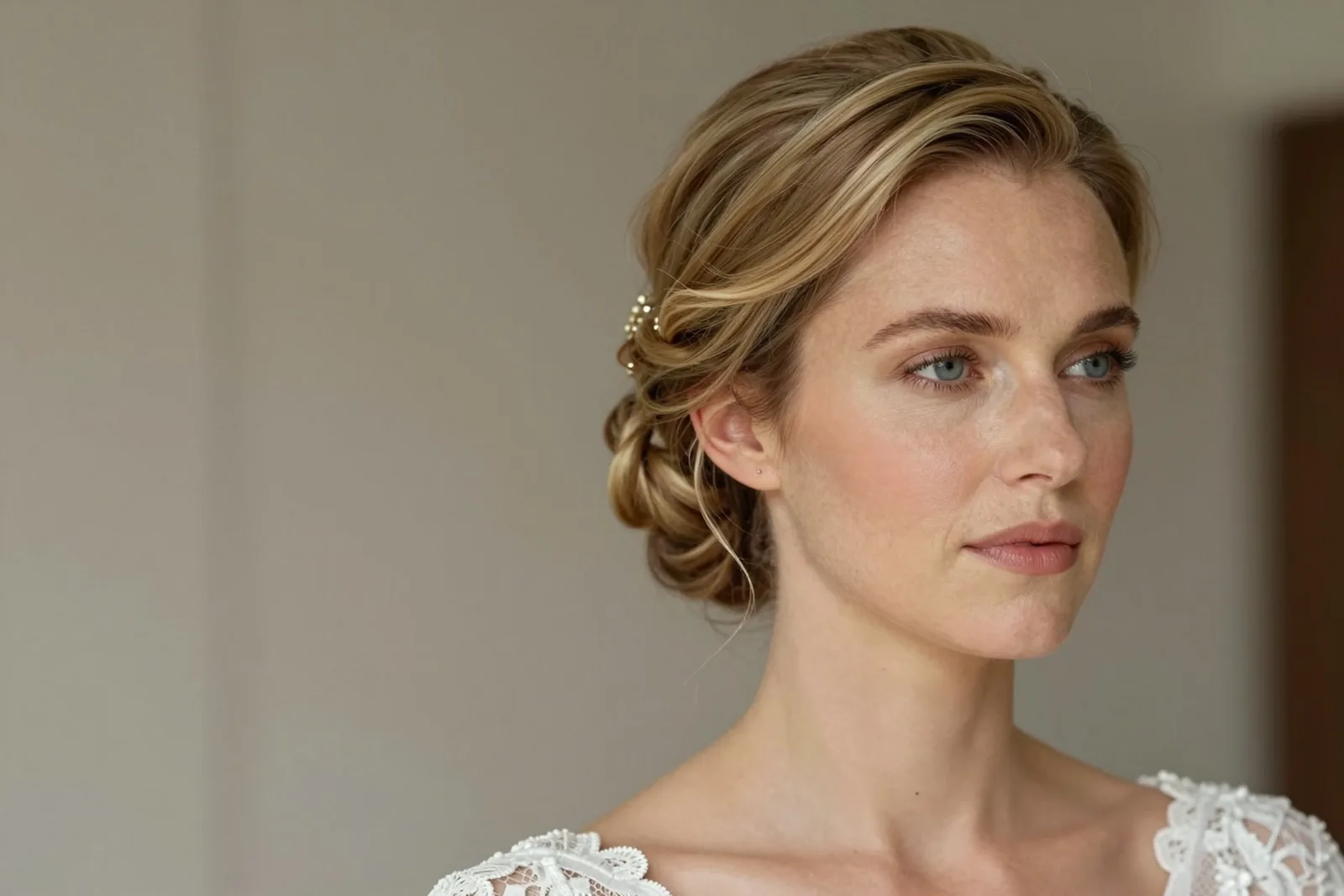
Bridal updos
Structured updos that stay polished from ceremony photos through the last dance—without looking stiff.

Half-up half-down
The versatile middle ground: secured crown, free-moving lengths—ideal when you want softness without full commitment to an updo.

Loose waves
Soft, dimensional waves that feel like you—elevated for photographs, still comfortable for a full reception.

Sleek low bun
A clean, modern low bun that flatters minimal gowns, statement earrings, and humid venues.
Related guides: Just Engaged Over the Holidays? Your First 30 Days Wedding Planning Checklist · 2027 Wedding Venue Contract Checklist: 14 Hidden Fees & Clauses to Catch After Getting Engaged · 2027 Realistic Wedding Budget Breakdown by Guest Count (50, 100, 150 Guests) · Wedding Day Beauty Timeline · Bridal Hair Timeline: From First Idea to Wedding Morning