Just Engaged Over the Holidays? Your First 30 Days Wedding Planning Checklist
Updated 2026-11-24 · Published by Perfect Wedding Tips Editorial
A calm 30-day engagement roadmap: insure the ring, confirm all-in budget math, draft your A/B guest list, and tour venues without booking traps.
Quick answer
Spend your first 30 days engaged on five high-leverage moves in order: insure the ring, align on three shared priorities and flexible date windows, lock your true all-in budget (after 28%–36% venue fees and taxes), draft an A/B guest headcount, and tour 3–5 venues with full itemized proposals before signing any non-refundable deposit.
Getting engaged between Thanksgiving and New Year's puts you squarely in peak Engagement Season—when venue calendars for 2027 Saturdays fill fastest and well-meaning relatives start asking for a date before you have finished your champagne. Slowing down for four structured weeks protects both your sanity and your wallet. Before you open 40 inspiration tabs, work through this week-by-week sequence so every decision rests on real capacity, real contracts, and real numbers.
Your 30-day roadmap at a glance
| Window | Primary Objective | Key Deliverable | Common Trap to Avoid |
|---|---|---|---|
| Days 1–3 | Celebrate & protect the ring | Ring appraisal + valuable personal property rider | Posting before family calls; relying on base homeowners jewelry caps |
| Days 4–10 | Align on vision & date windows | Top 3 non-negotiables + 2–3 season windows | Locking a single Saturday before checking venue availability |
| Days 11–18 | Set the true all-in budget | Written contribution totals + 30% fee/buffer reserve | Shopping venues using base sticker price instead of all-in `++` cost |
| Days 19–25 | Build the A/B guest list | Tier A (must-invite) & Tier B headcounts | Touring spaces without knowing if you have 85 or 145 guests |
| Days 26–30 | Shortlist & tour 3–5 venues | Side-by-side all-in proposals + liability check | Signing deposits before seeing overtime, cake, and corkage clauses |
Days 1–3: Protect the moment and insure the ring
Give yourselves 48 hours to call grandparents, siblings, and close friends before anything hits social media. Once the joyful calls are done, put practical protection around the ring immediately. Standard homeowners and renters policies typically cap jewelry theft at around $1,500—far below most engagement ring replacement values—and rarely cover mysterious disappearance or chipped prongs while traveling.
- Get the lab certificate and appraisal in one folder: Photograph the diamond or gemstone report, receipt, and setting details, and save copies in cloud storage.
- Add a dedicated valuable personal property rider: Either schedule the ring onto your existing policy or bind standalone jewelry coverage (such as Jewelers Mutual) so loss, theft, and damage are covered from week one.
- Pause on major beauty changes: If you are already picturing engagement photo hairstyles or a celebratory dinner, keep haircuts and color subtle until you choose your engagement shoot wardrobe.
Days 4–10: Agree on three non-negotiables and flexible date windows
Most wedding overspending happens when couples try to say yes to every category at an A-list level. Sit down together with zero outside input and rank every major pillar: guest count, food and bar quality, photography and video, live music, florals, attire, and weekend hospitality. Circle your top three.
- Choose 2–3 date windows instead of one rigid day: Holding a Saturday in May, June, September, or October 2027 carries steep food-and-beverage minimums ($15,000–$35,000+ at popular venues). Friday evenings, Sundays, or late-winter shoulder months often unlock 15%–25% lower site fees and broader vendor availability.
- Respect booking velocity by category: Venues, full-service planners, and lead photographers have single-event-per-day inventory and routinely book 14–20 months ahead for peak 2027 Saturdays. Florals, hair and makeup teams, and rentals follow once the venue contract is signed.
Days 11–18: Confirm family contributions and the all-in budget
Before a single venue walk-through, have direct, respectful conversations with anyone offering financial help. Clarify exact dollar amounts, payment timing (upfront deposit versus final month), and whether a contribution comes with guest-list or ceremony expectations.
Next, run your combined total through our Wedding Budget Calculator and review our 2027 wedding budget breakdown by guest count. Critically, do not treat a $40,000 bank balance as $40,000 in base vendor contracts. Across US hospitality venues, mandatory 18%–25% service charges, state and local sales tax stacked onto service fees, and expected staff gratuities create a 28%–36% "Plus-Plus" (`++`) gap above quoted menu prices.
- Set aside 30% upfront for `++` fees and contingency: A $120-per-plate catering quote quickly lands near $170–$178 per guest once service, stacked sales tax, and tips are added.
- Sanity-check bar costs early: If you are comparing an all-inclusive venue bar package against a dry-hire space where you supply beer, wine, and spirits, plug your estimated guest count into our Wedding Alcohol Calculator and read our wedding reception alcohol buying guide before touring.
Days 19–25: Draft a realistic A/B guest list
Guest count is the single biggest lever in wedding math—every 10 extra guests add roughly $1,200–$2,500+ in catering, bar, rentals, stationery, and service fees. Build one shared spreadsheet divided into three clear tiers:
- Tier A (Non-negotiable core): Immediate family, wedding party, and the friends you genuinely see or speak with regularly.
- Tier B (Extended circle): Cousins, work colleagues, family friends, and plus-ones for guests who are not living with or engaged to a partner.
- Tier C (Nice-to-invite): Courtesy invites only if Tier A/B declines free up seats.
Never sign a venue contract with a minimum guest guarantee above your confirmed Tier A count. Venues enforce food-and-beverage minimums even if 20% of your list declines, leaving couples paying for phantom plates.
Days 26–30: Tour 3–5 venues with all-in math and insurance checks
Request itemized sample proposals from your shortlist before driving out for tours. If a venue refuses to share real service-charge percentages, tax rates, or corkage rules in writing beforehand, cross it off the list early.
- Audit the fine print on every proposal: Ask specifically about cake-cutting fees ($2–$6 per guest), outside-vendor penalties ($500–$1,500), vendor overtime rates ($500–$1,500 per hour across venue, bar, and music), late-night rental pickup surcharges ($400–$1,200), and hot vendor meals ($35–$75 each for 6–12 working pros).
- Verify event insurance requirements: More than 80% of US venues require $1 million in general liability event coverage ($150–$250 for a weekend policy). Also inspect force majeure and rescheduling clauses before wiring a non-refundable retainer.
- Plan beauty and celebration milestones gently: Once the venue and date are locked, bookmark the Wedding-Day Beauty Morning Timeline Calculator and bridal hair timeline so hair trials, dress fittings, and engagement party hairstyles fall into a calm cadence without last-minute panic.
FAQ
Should we pick a wedding date before touring venues?
Pick 2–3 target months or weekend windows rather than one rigid Saturday. Keeping your date flexible lets you compare venue minimum spends and avoid locking yourself into peak-Saturday pricing if a Friday or shoulder date saves thousands.
Why should we insure the engagement ring right away?
Standard homeowners and renters policies typically cap jewelry theft near $1,500 and exclude accidental loss or stone damage. Adding a valuable personal property rider in week one protects the full appraised value.
What hidden costs should we ask about during venue tours?
Ask for written numbers on mandatory service charges (18%–25%), sales tax stacked on top of service fees, expected staff gratuities, cake-cutting fees, outside-vendor or corkage fees, vendor overtime rates, and hot meals for 6–12 working vendors.
Styles to open next
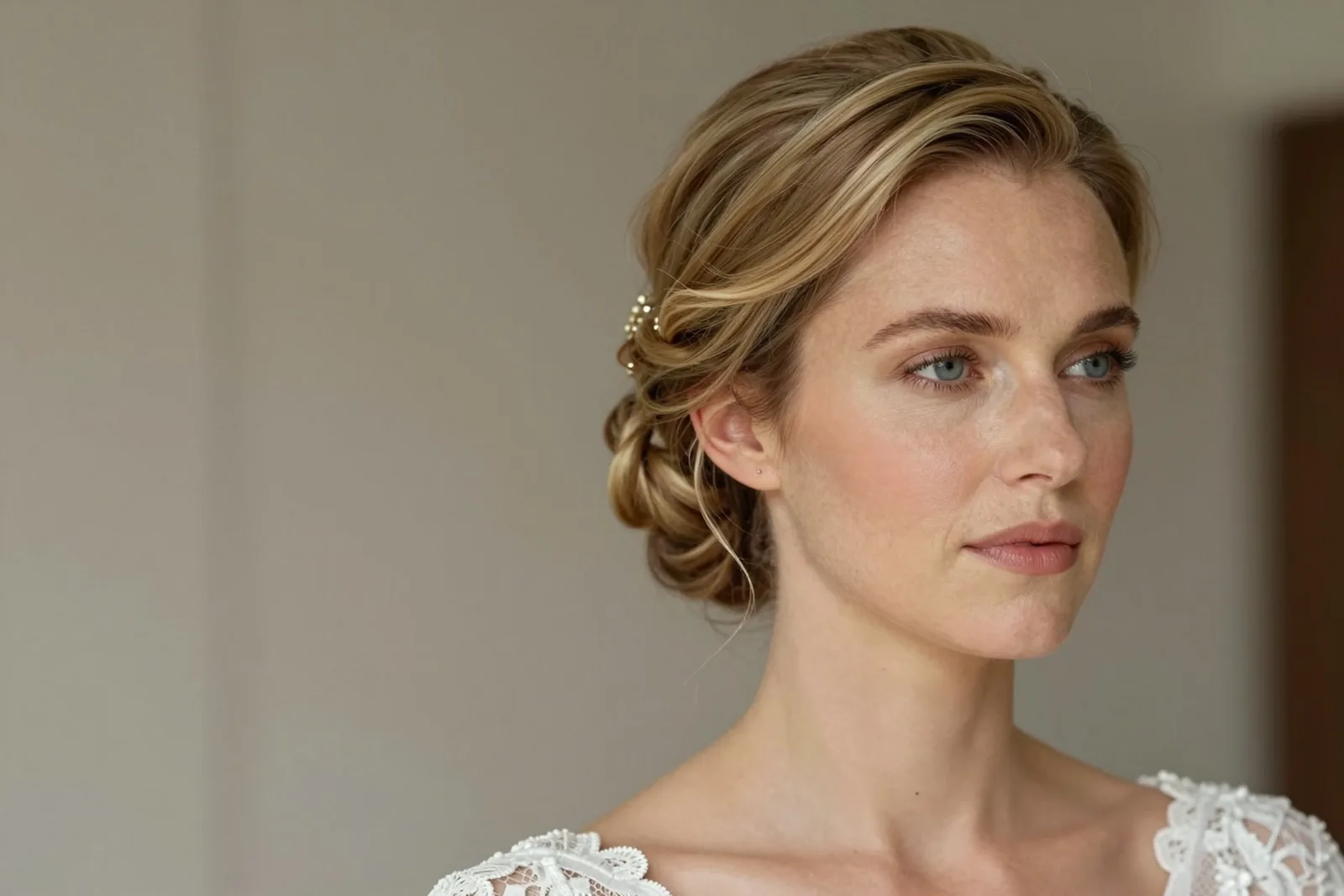
Bridal updos
Structured updos that stay polished from ceremony photos through the last dance—without looking stiff.

Half-up half-down
The versatile middle ground: secured crown, free-moving lengths—ideal when you want softness without full commitment to an updo.

Loose waves
Soft, dimensional waves that feel like you—elevated for photographs, still comfortable for a full reception.

Sleek low bun
A clean, modern low bun that flatters minimal gowns, statement earrings, and humid venues.
Related guides: Winter Engagement Season Guide: Ring Care, Venue Timeline & 2027 Budget Plan · 2027 Realistic Wedding Budget Breakdown by Guest Count (50, 100, 150 Guests) · How Much Alcohol to Buy for a Wedding Reception (Bar Formula + Calculator) · Engagement Photo Hairstyles · Engagement Party Hairstyles · Wedding Day Beauty Timeline · Bridal Hair Timeline: From First Idea to Wedding Morning